


Hand off the marketing, keep your focus on clients
We handle the ads, SEO, and follow-up behind the scenes, so your attention can stay on your clients.
We help therapists and small practices book more of the right clients through search, ads, and a website built to turn visitors into calls.
Mental health only HIPAA-aware marketing No lock-in contracts
Average lift in qualified
inquiry volume within 6 months
Median reduction in cost
per scheduled intake
Client retention across
multi-location clinic partners
Faster time-to-book for
new patient inquiries
You spent years learning to help patients, not to rank on Google or run ad campaigns. So when the calendar has openings, marketing can feel like a second profession you never chose — usually after a directory listing or two, a few boosted posts, or an agency that treated your practice like any other local business.
That's where we come in. CuraReach handles the marketing for you, built around the ethics and privacy standards your field runs on — so you can fill your practice without becoming a marketer, and keep your focus on your patient.
We handle the ads, SEO, and follow-up behind the scenes, so your attention can stay on your clients.
We already know the ethics, the HIPAA rules, and how clients actually search for a clinician

Month after month, more of the right clients find you.
From discoverability to scheduled intakes — every channel is tuned for mental health clinics.
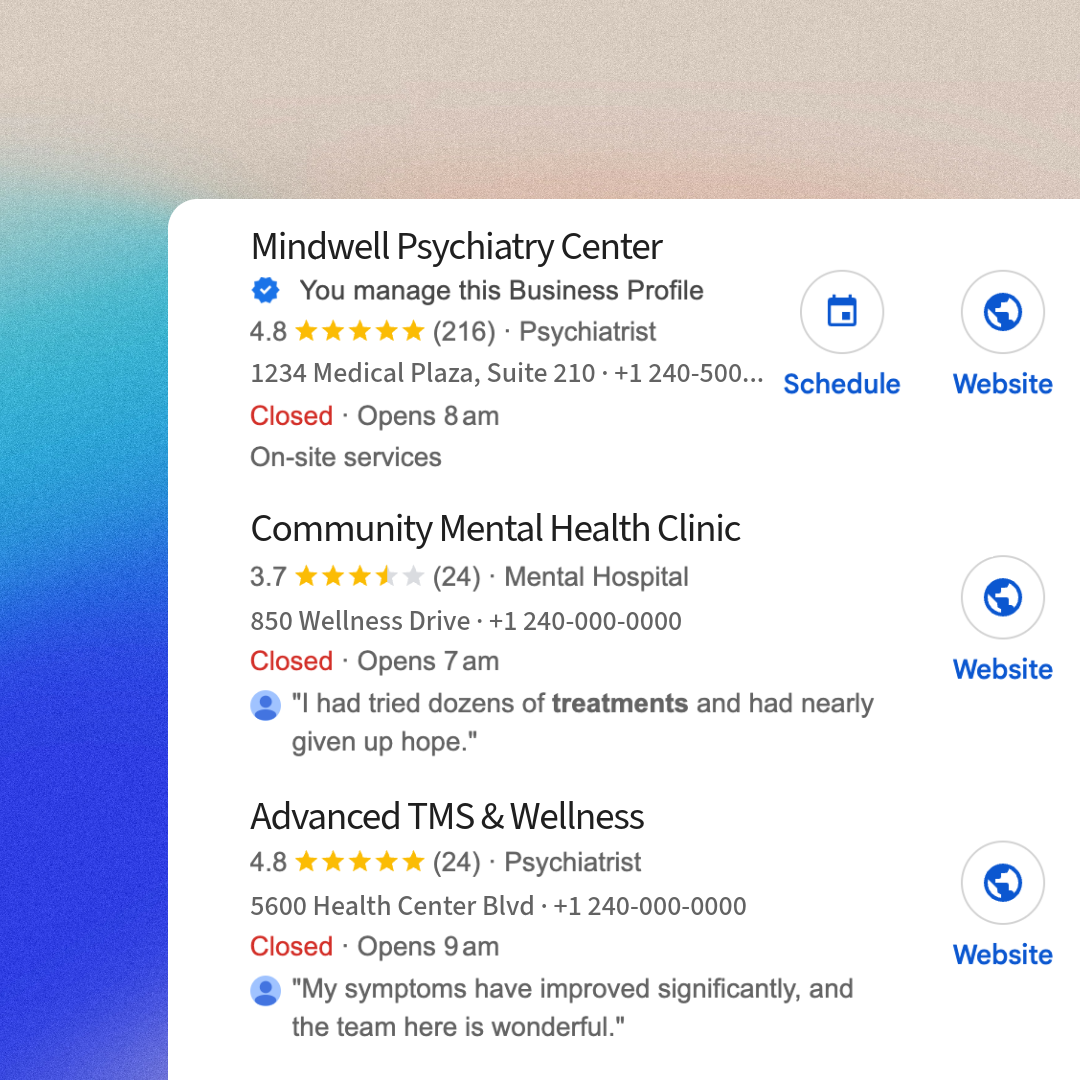
We rank your clinic for the high-intent treatment searches happening in your service area every day.
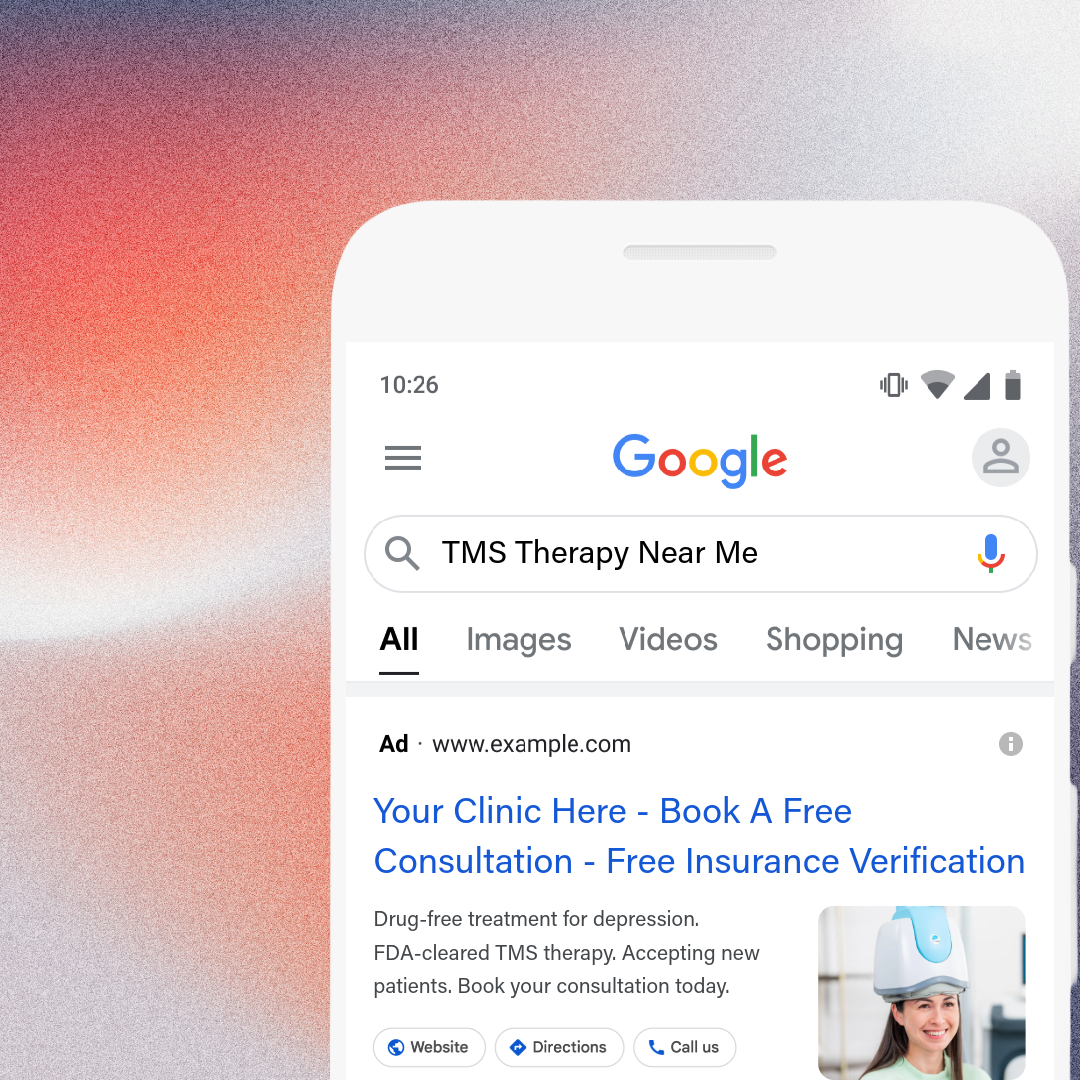
Targeted campaigns that filter for insurance match and treatment readiness — not just clicks.

Clinic websites built to turn anxious, overwhelmed visitors into booked consultations.
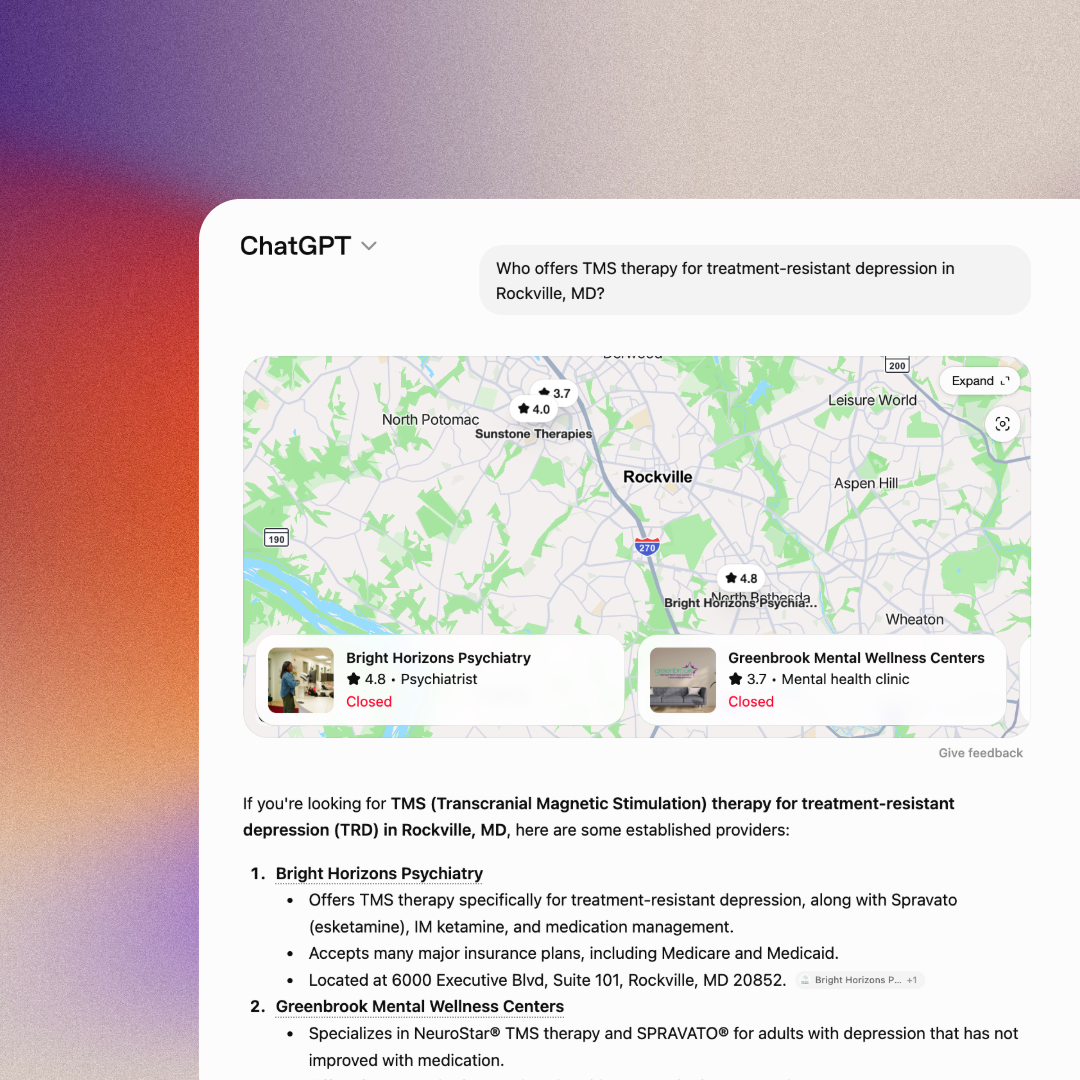
Get your clinic cited in ChatGPT, Perplexity, and Google AI Overviews — where patients already ask for help.
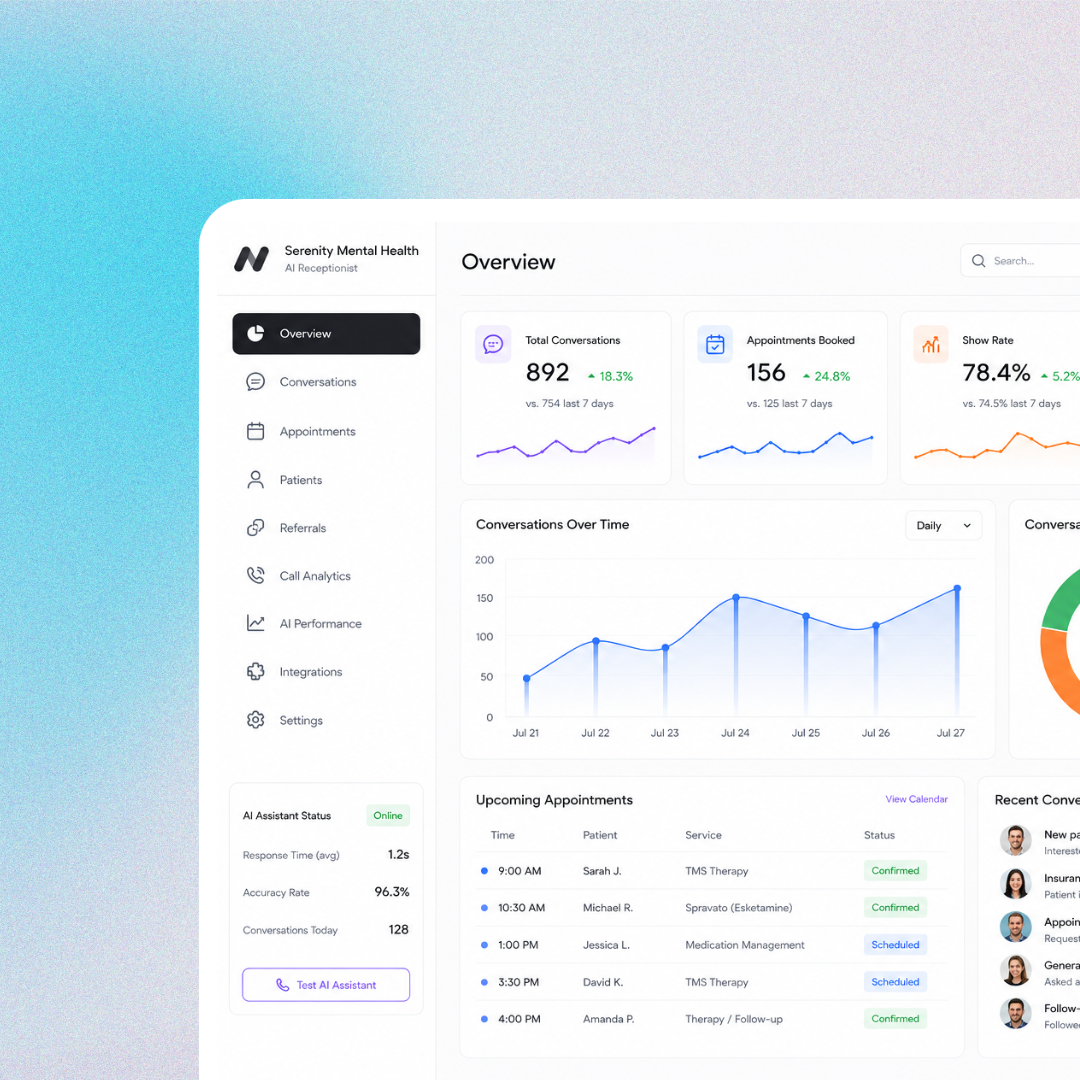
AI phone agents that answer after hours, book intakes, and route urgent callers — no ready patient left on voicemail.
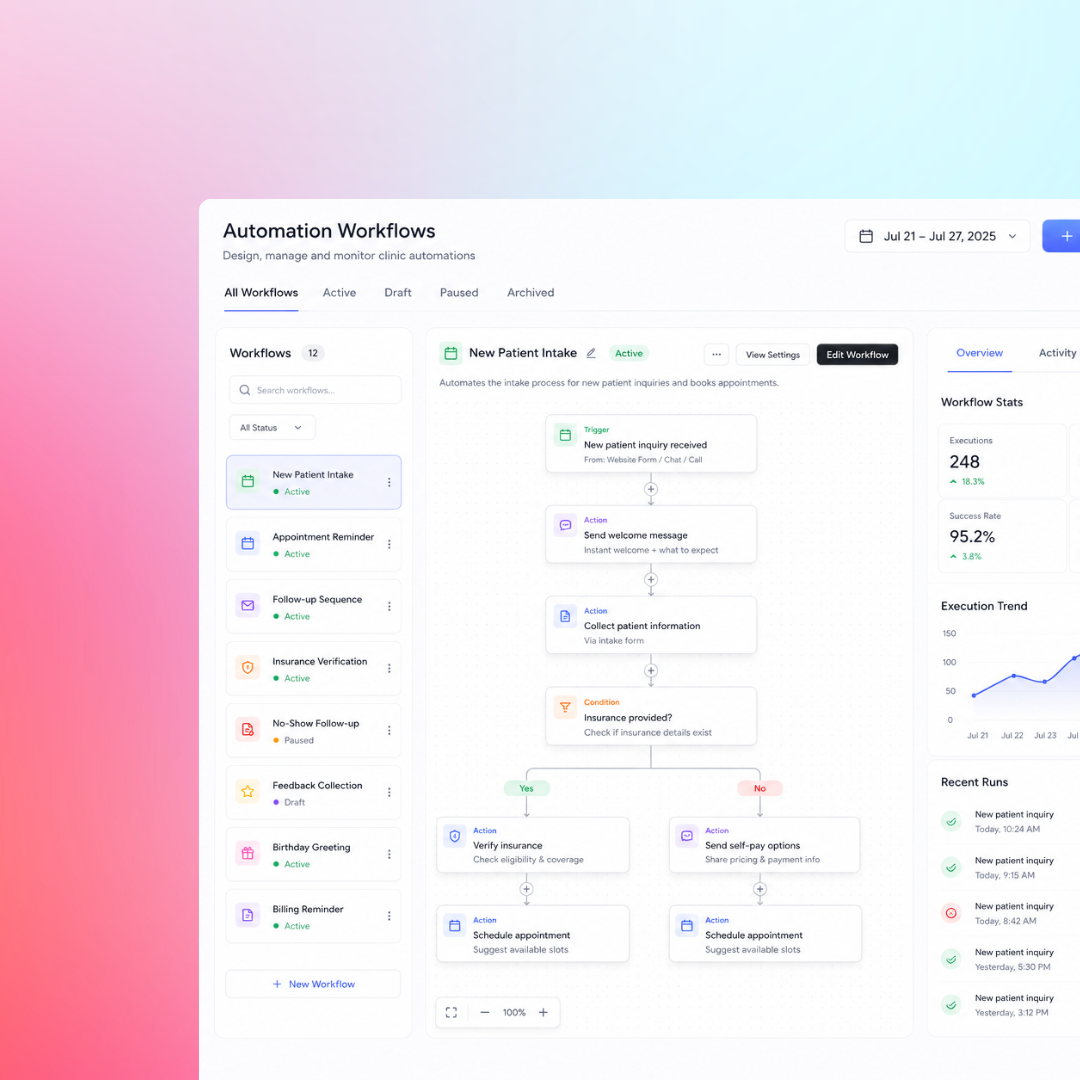
Follow-up sequences that answer inquiries, finish forms, and confirm consultations before leads go quiet.
We make sure your practice shows up across search and AI.
Real work with mental health practices — the problem, what we built, and the numbers that moved.
Ads can bring calls in the first few weeks. SEO is slower, usually two to four months before it builds real momentum. We'll be honest about the timeline before you spend anything.
Yes. We set up tracking so client information never reaches Google or Meta, and we follow the ad policies that apply to health services.
Understandable. That's why we work month to month, report in plain language, and start with a free audit, so you can judge us before you commit.
No. We'd rather you stay because it's working.
That's fine. Pick one piece to start and add the rest when the time is right.

Healthcare SEO
Google's eligibility rule disqualifies more therapists than most guides admit, and the practitioner naming rule has two versions that contradict each other depending on your setup. What the guidelines actually say for home offices, rented rooms, group practices and telehealth.
9 min read

Private Practice Marketing
Every startup guide is a checklist that treats twenty items as equally urgent. Some take five minutes and some take six months. Ordered by lead time instead, with honest cost ranges and the state-law traps that generic advice gets wrong.
9 min read

Private Practice Marketing
The craft of the profile, plus the honest context nobody publishes: what therapists are reporting about falling referrals, what Psychology Today actually says in response, and why the placement tricks circulating in forums are unverified.
9 min read

Private Practice Marketing
Not a list of twenty-eight. Directories split into three business models, and the model decides what listing costs you and what happens when you leave. Current pricing from each provider, which two to pick, and what a directory cannot do for you.
8 min read

Spravato Marketing
S0013 was terminated at the end of 2025 and replaced by J0013, which is behind a lot of this year's denials. Here is the current code set, why how you acquire the drug decides which half of it applies to you, and where payers disagree with each other.
10 min read

Spravato Marketing
The enrollment form is the smallest part of the Spravato REMS. A prescriber on site, a pulse oximeter, a monitoring form within seven days of every dose, and at least two hours per patient per session. Here is what the program requires and what it does to your capacity.
10 min read

Spravato Marketing
The manufacturer will not promise a reimbursement level for its own drug, and neither should anyone else. What determines your rate, how to find it, exactly who qualifies for the withMe savings program, and why most denials are administrative rather than clinical.
8 min read

TMS Marketing
TMS has three CPT codes and you will learn them in a week. What costs clinics money is coverage: one Medicare LCD asks for a single failed antidepressant trial, Aetna asks for two plus augmentation. Plus where accelerated and MRI-guided protocols actually stand.
9 min read

Private Practice Marketing
Published state averages for Headway run from roughly $89 to $122, and the premium over contracting directly with insurers comes out close to zero. Here is what the public data shows, why the two most-read articles on this question disagree, and how to get the only rate that matters: yours.
11 min read

Private Practice Marketing
There is no cancel button. You have to email them, there are no partial refunds, and a pause option exists that almost nobody knows about. Here is how to cancel, plus the harder question of whether the problem is Psychology Today or your profile, and what has to be running before you leave.
10 min read

Private Practice Marketing
Three things fill a therapy calendar within weeks. Three more take months but keep compounding. A few rarely work at all for a solo practice. Here is every route to new clients sorted by how long it takes to produce one, plus the enquiries most practices are already losing before the first session.
11 min read

Private Practice Marketing
There are three ways to get paneled: do it yourself, pay a credentialing service, or join a platform. They cost different amounts, take different lengths of time, and leave you owning very different things at the end. Plus the part every guide skips, which is what a panel does not do for you.
10 min read