
TMS Marketing Agency for Interventional Psychiatry Clinics
Marketing for psychiatrists running TMS clinics — SEO, Google Ads, and websites that fill treatment chairs.
Why TMS chairs stay empty
TMS patient acquisition rarely fails because of the device — it fails when awareness, referrals, and follow-up don’t keep the schedule full.
Expensive machines sitting idle
You’ve invested six figures in a TMS system. Every open hour is staffed cost with no treatment revenue — and the calendar still has gaps.
Inconsistent psychiatrist referrals
Referral volume rises and falls with one champion’s schedule. When relationships go quiet, so does your pipeline — with no backup channel.
Patients have never heard of TMS
Eligible patients still search for depression treatment, not TMS. If you’re not showing up in that language, they never learn you exist.
Ad budgets that don’t book consults
Spend reports show clicks and form fills — not insurance-ready patients on the calendar. Marketing looks busy while chairs stay empty.
The demand is already there
Over 12,000 people search “TMS therapy near me” every month, plus ~8,000 for “TMS for depression.” The patients are looking — the question is whether they find you.
Monthly searches for
“TMS therapy near me”
Monthly searches for
“TMS for depression”
Combined monthly search
demand for TMS care
What we do for TMS clinics
From discoverability to booked consults — every channel is tuned for TMS patient acquisition, not generic mental health leads.
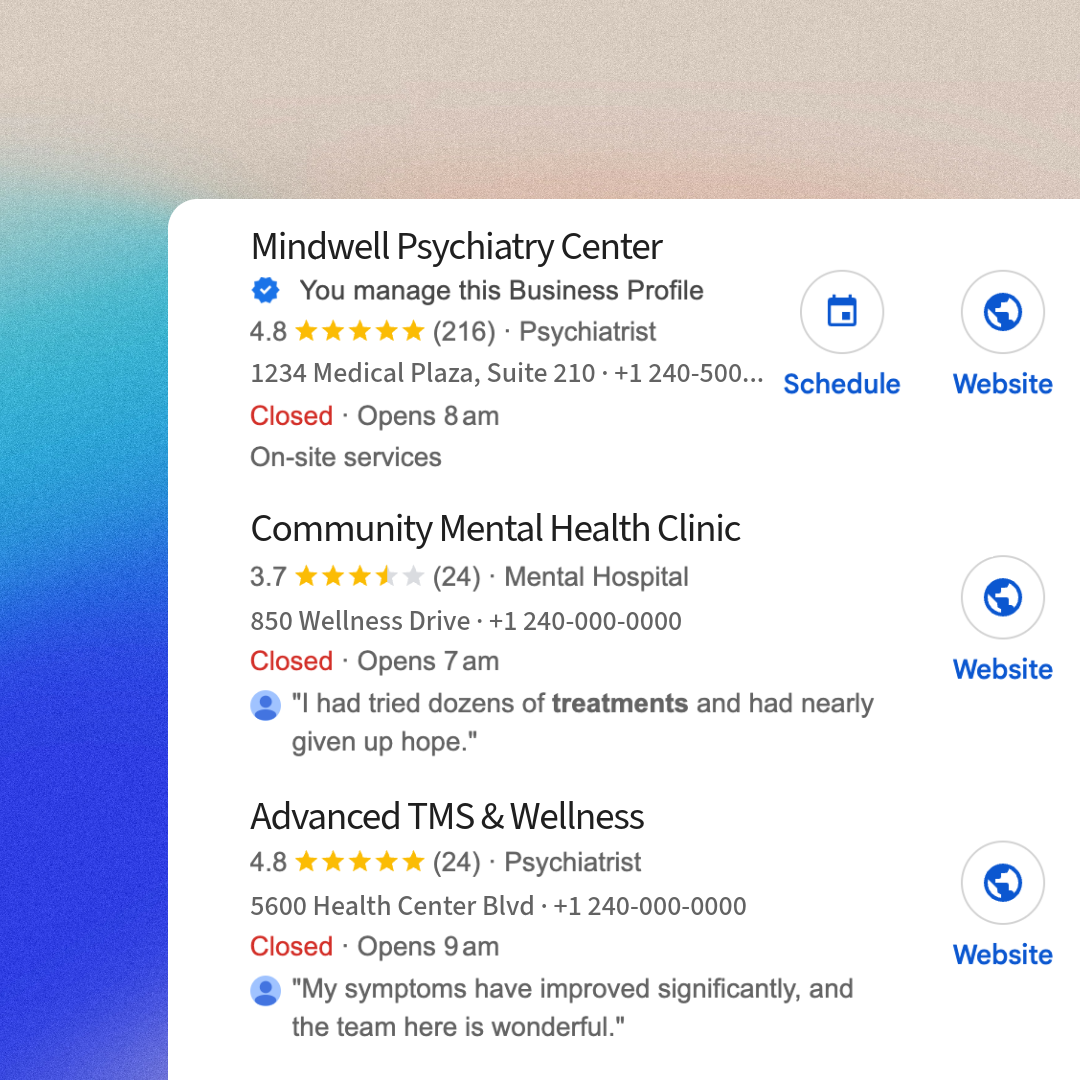
SEO & local search for TMS
Rank for “TMS near me,” “TMS therapy,” and related local searches so patients looking for treatment find your clinic first.
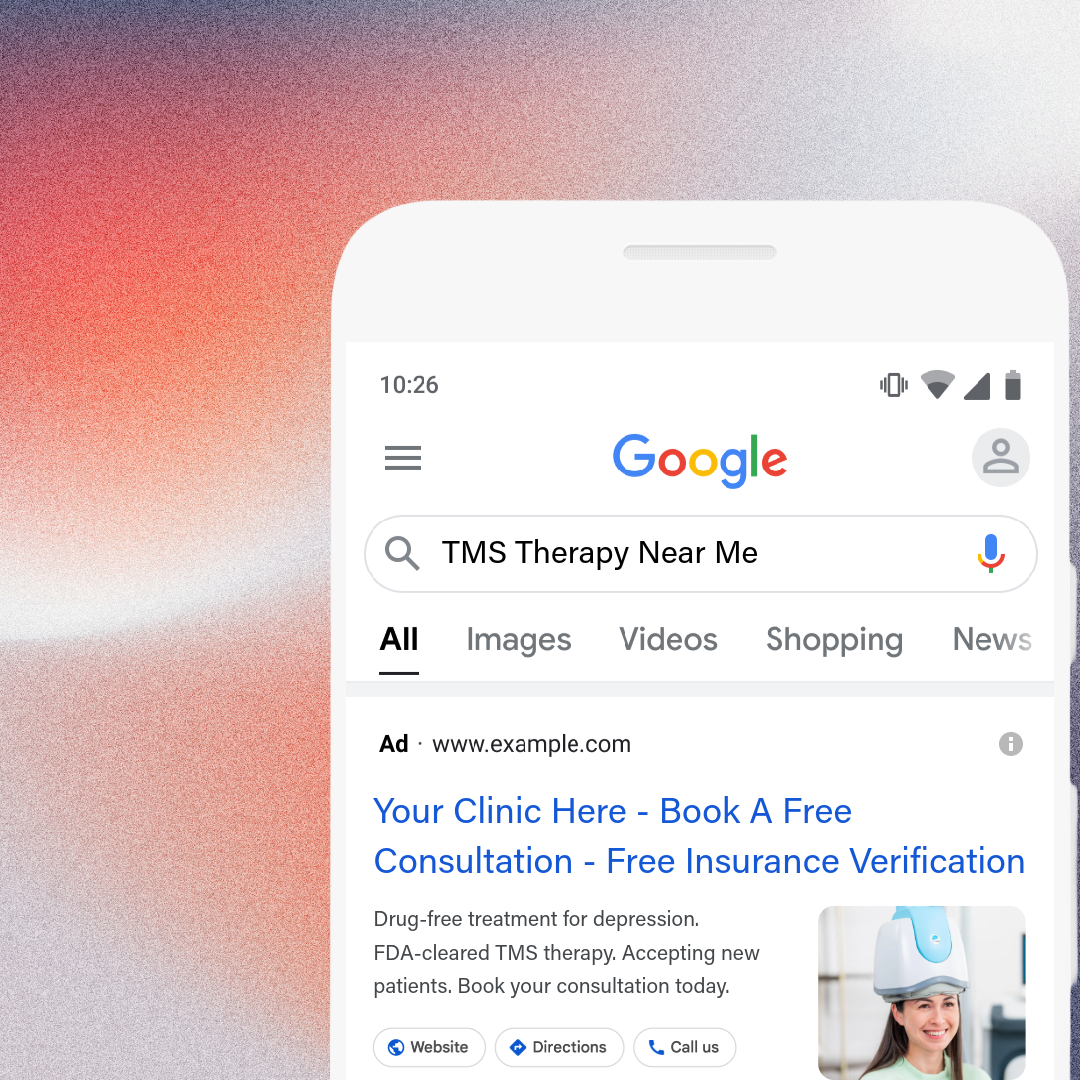
Google Ads & paid media for TMS
Capture high-intent TMS searches and filter for insurance-eligible leads — so ad spend turns into booked consults, not clicks.
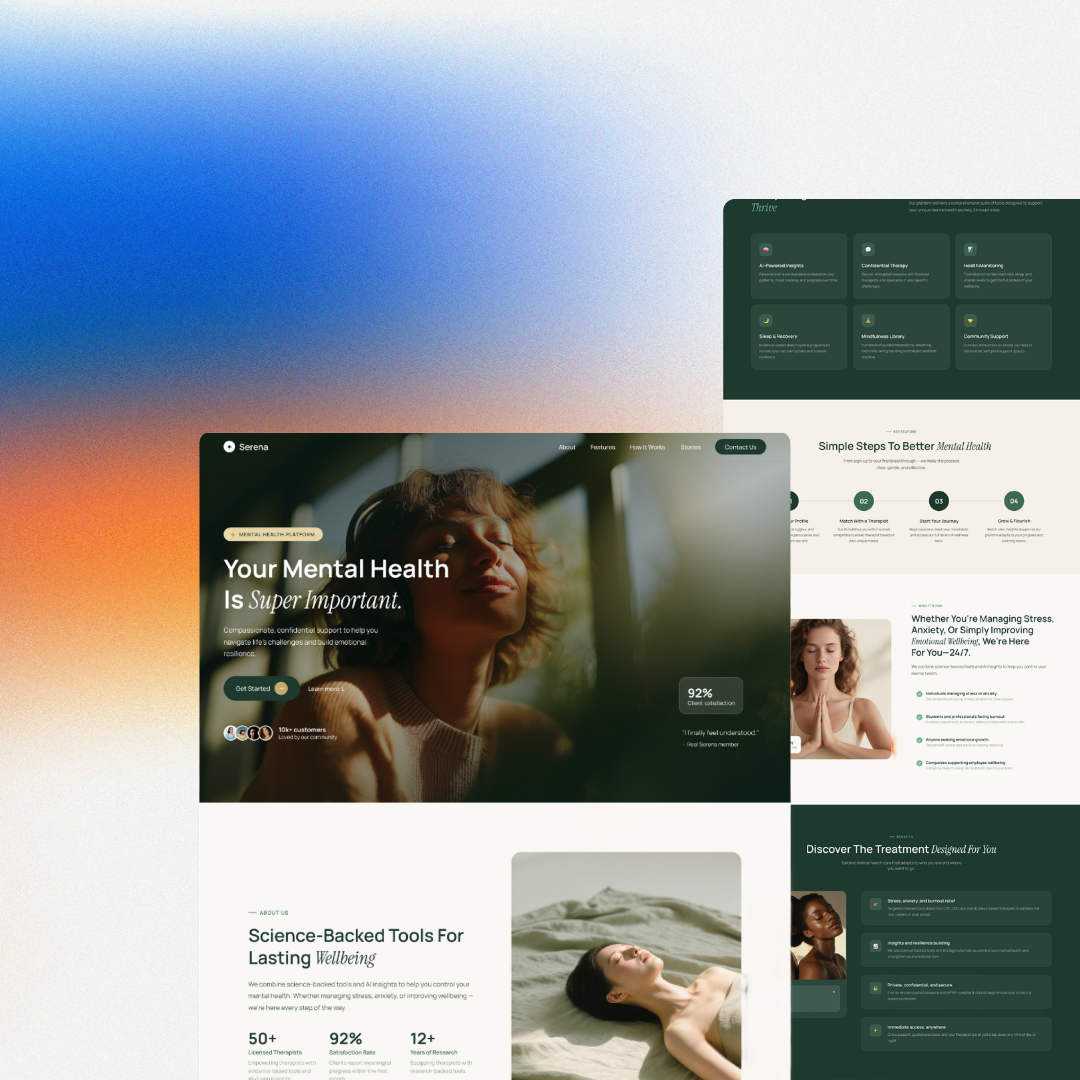
Conversion-focused TMS websites
Clinic sites that explain TMS clearly, answer coverage questions, and move visitors toward a booked consult.
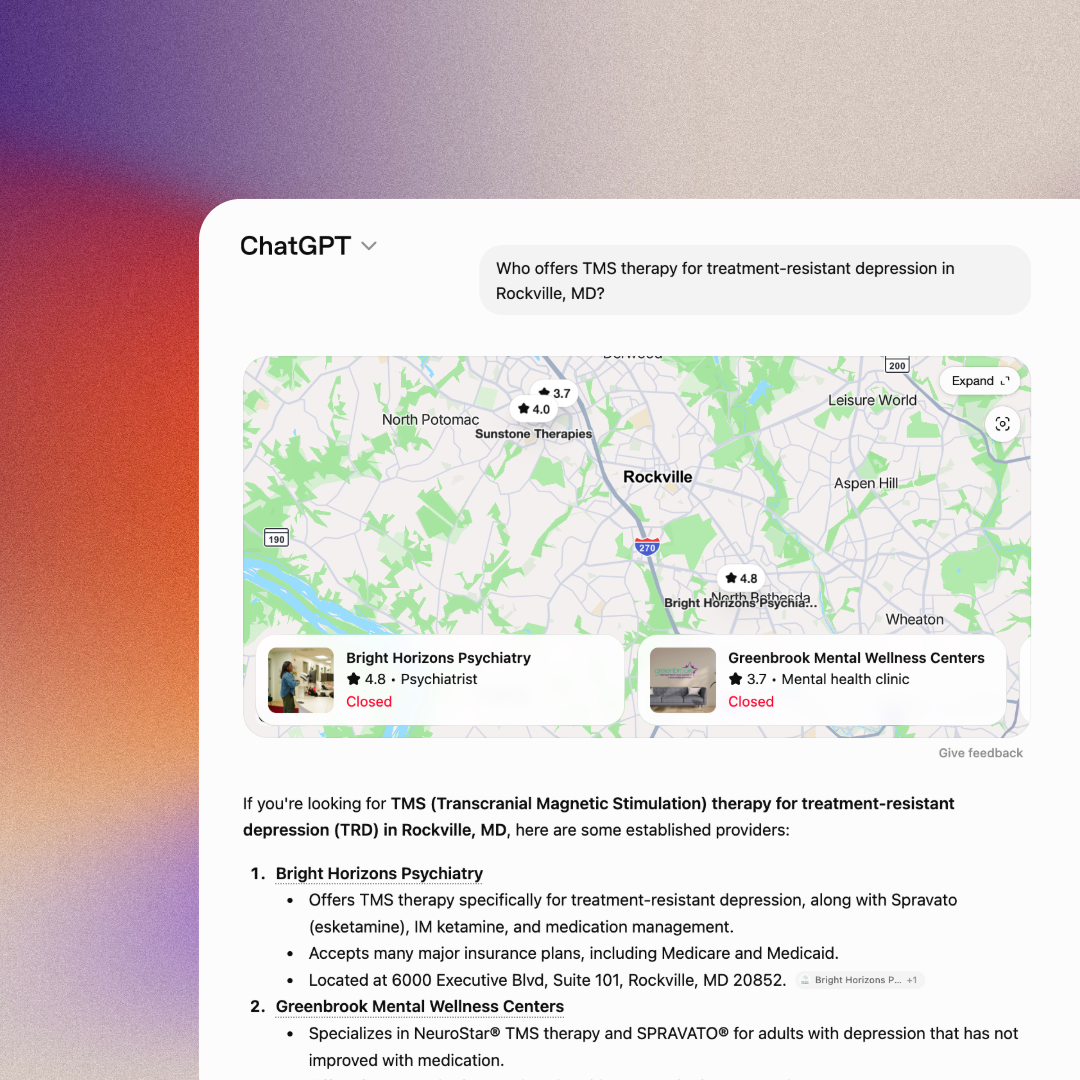
AI search optimization for TMS
Get your clinic cited when patients ask ChatGPT, Perplexity, or Google AI about TMS, depression treatment, and clinics near them.
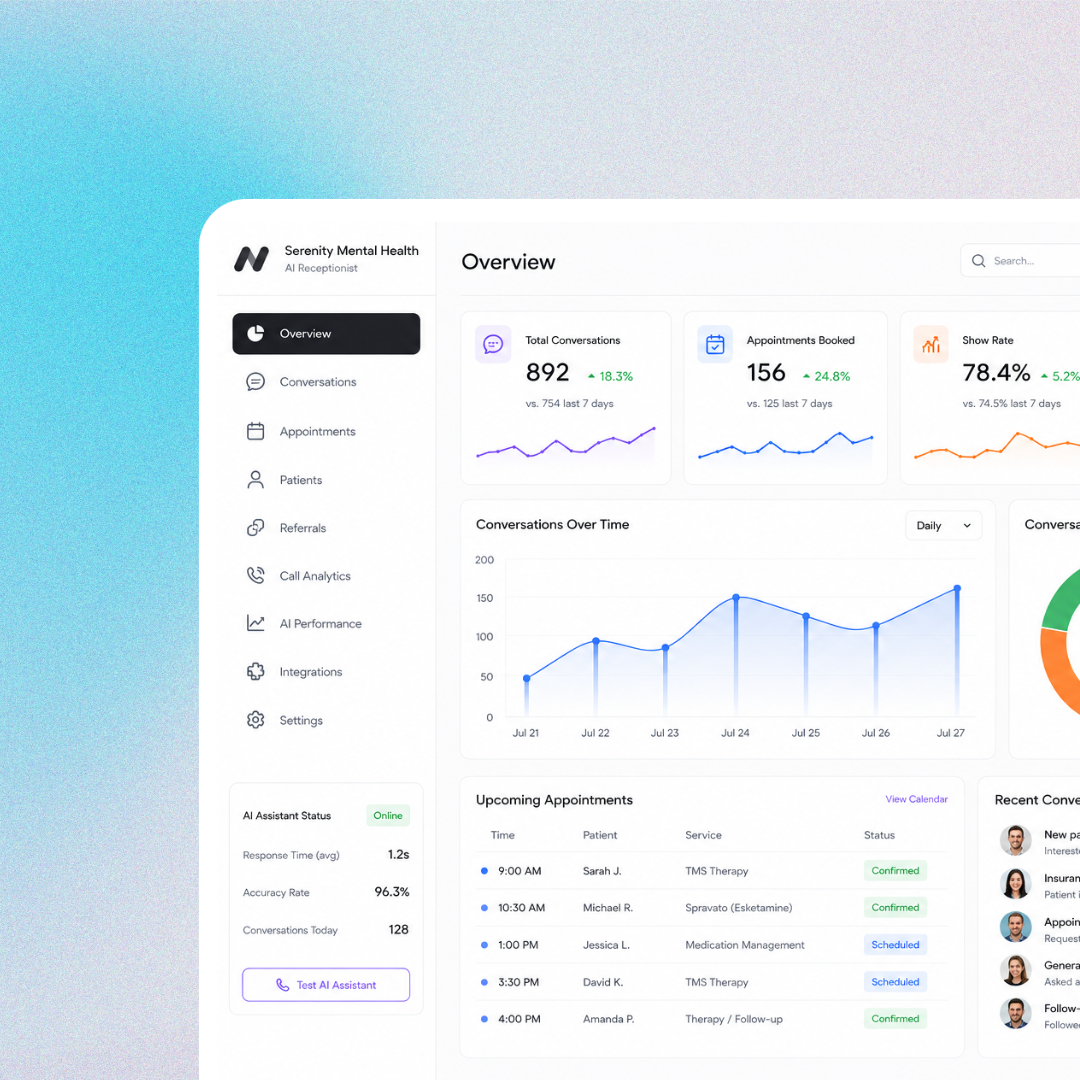
Voice AI for TMS clinics
After-hours phone agents that answer TMS questions, qualify coverage intent, and book consults so no ready patient hits voicemail.
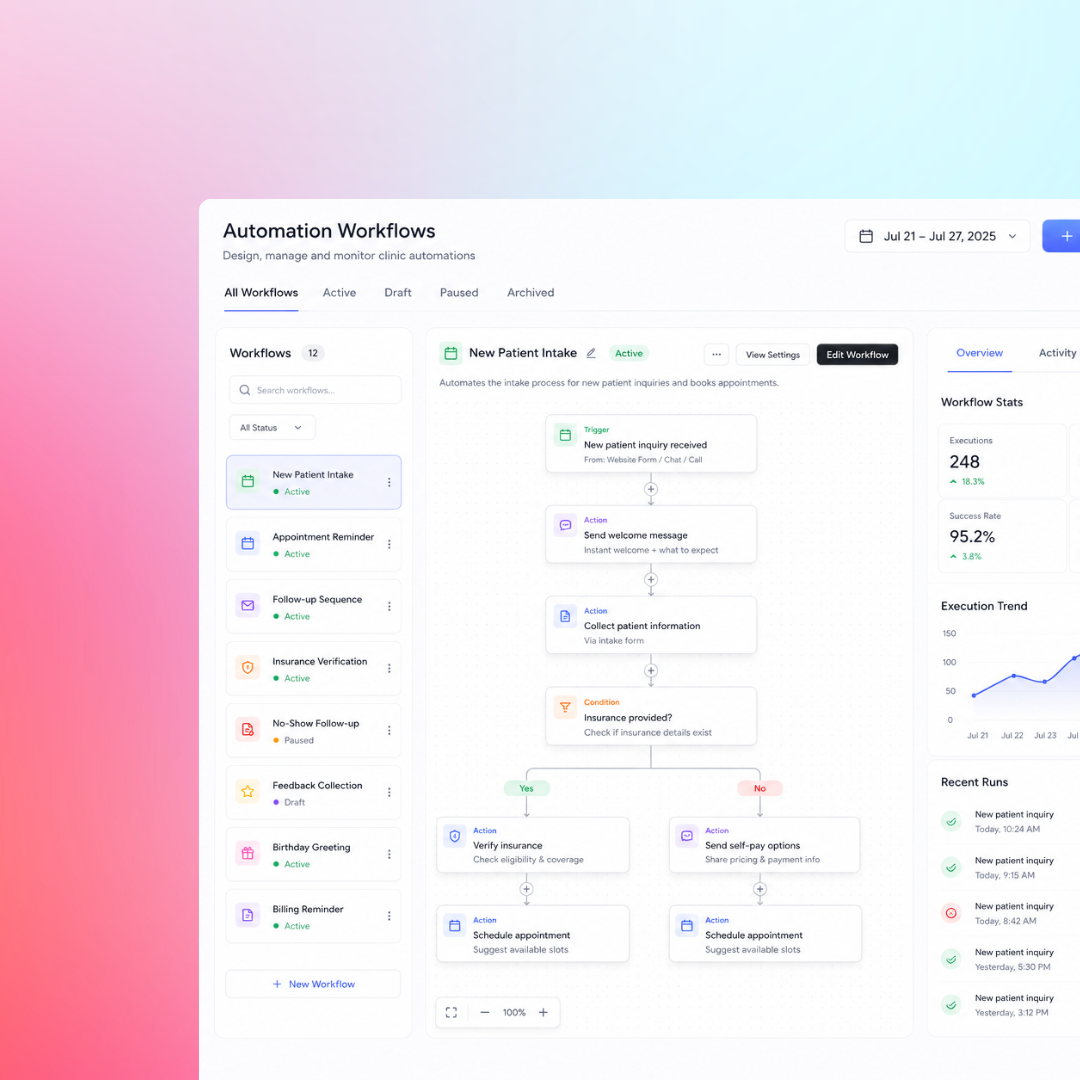
Intake automation for TMS
Follow up every TMS inquiry fast, capture insurance details, and confirm consults before leads go quiet.
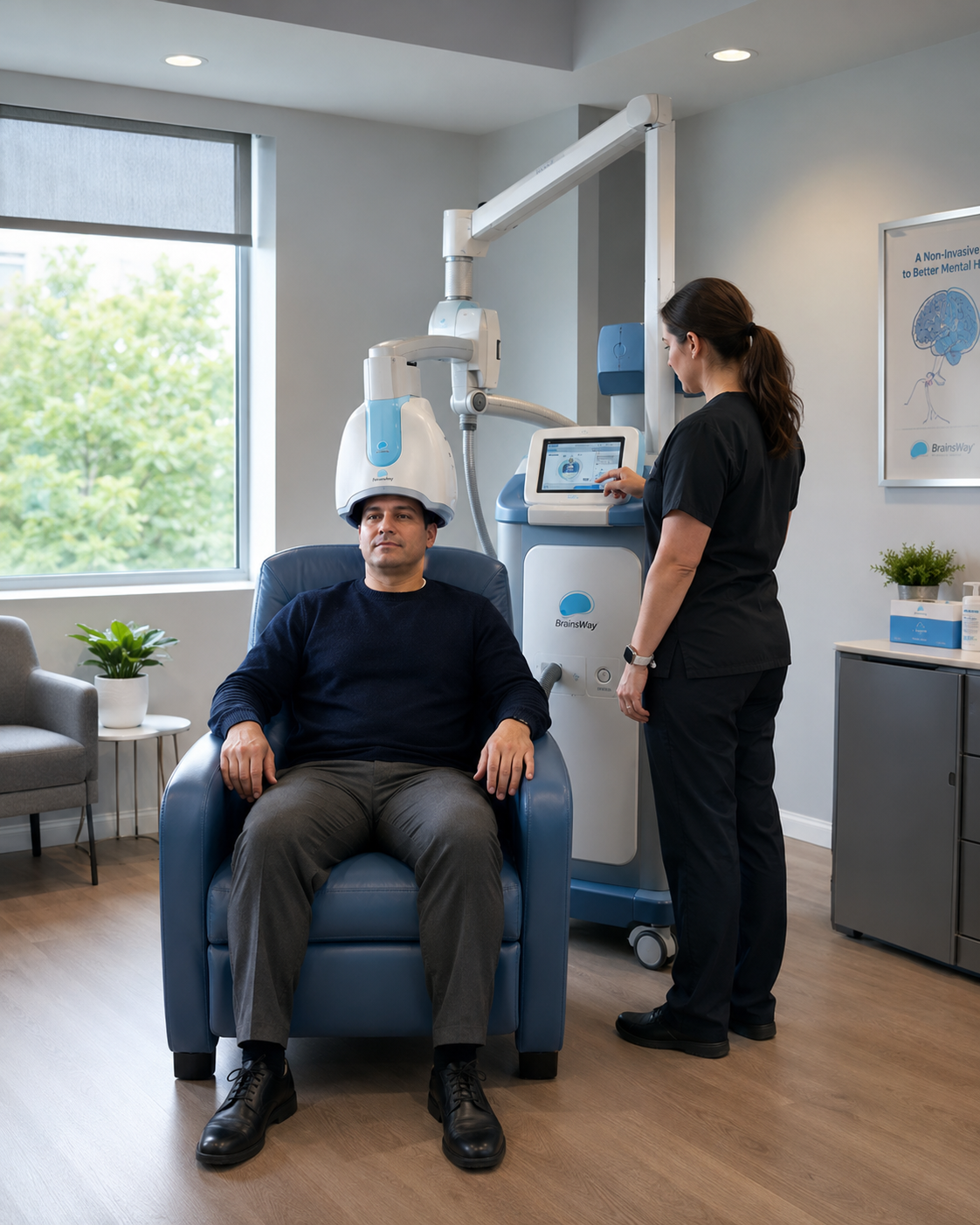
Why TMS marketing is different
Generic small-business playbooks miss how TMS patients actually decide. This is a considered, insurance-driven treatment decision — and the marketing has to match that reality, not a retail funnel.
Insurance-driven decision
TMS is typically covered for major depression after failed medications. Demand gen has to surface coverage intent early and hand staff insurance-eligible leads — not tire-kickers who can’t move past prior auth.
Long consideration cycle
Patients research TMS for weeks: what it is, whether it works, what a session feels like, and what insurance will cover. Content and follow-up have to educate through that cycle — not push a same-day “book now” pitch.
HIPAA-sensitive advertising
Ad platforms, pixels, and CRMs are not a free-for-all with mental-health data. Campaigns need HIPAA-aware tracking, careful claims, and landing pages that match what patients are actually searching — without leaking PHI.
Psychiatrist referral relationships
Many TMS starts still come through referring psychiatrists. Marketing has to support that channel — and build a direct patient pipeline that doesn’t collapse when one referral relationship goes quiet.
How it works for TMS clinics
A clear path from free audit to filled TMS chairs — so you know exactly what happens next, and when.
-
Free audit
We review your local search presence, ads, site, and intake path — then show where TMS demand is leaking and what to fix first.
-
Strategy & plan
We map the highest-ROI channels for your market, payer mix, and capacity — with a clear plan, timeline, and what “booked consult” success looks like.
-
Build
We build the site pages, funnels, and campaigns that explain TMS, capture insurance-eligible intent, and move patients toward a consult.
-
Launch & optimize
Campaigns go live with HIPAA-aware tracking tied to booked consults — then we tune weekly and report in plain language on what’s filling chairs.
What you get
Clear deliverables — ads managed, pages built, CRM setup, and reporting cadence — so you know exactly what you’re buying before we start.
Get found
Launch
For TMS clinics ready to own local search and turn website traffic into consults.
- Google Business Profile + local SEO setup
- Up to 4 TMS service / location pages
- 1 conversion-focused landing page
- Basic GoHighLevel lead capture & alerts
- Monthly performance report
Most clinics start here
Growth
Search + ads + intake so high-intent TMS patients find you and actually book.
- Everything in Launch
- Google Ads: up to 3 campaigns / ~40 ad groups managed
- Up to 8 TMS pages (treatment, FAQs, insurance)
- Insurance-intent lead form / qualification funnel
- GoHighLevel CRM + nurture sequences
- Bi-weekly optimization + monthly strategy call
Fill every chair
Full funnel
Multi-channel TMS acquisition with deeper automation and always-on follow-up.
- Everything in Growth
- Google + Meta ads: up to 6 campaigns managed
- Full site build or rebuild (WordPress)
- Advanced GHL automation + review requests
- Voice AI or after-hours call handling (optional add-on)
- Weekly reporting + shared dashboard access
TMS clinic marketing FAQs
How much does TMS clinic marketing cost?
It depends on your city and how much of the funnel you want us running. Most TMS clinics pay a monthly management fee plus an ad budget they control. We give you a real number after a free audit instead of a vague range up front.
How long before we see more booked TMS consults?
Paid ads can bring booked consults within the first few weeks. Local SEO and organic rankings for terms like “TMS therapy near me” build over three to six months. We usually run both, so you get near-term leads while the organic traffic compounds.
Do you work with brand-new TMS clinics?
Yes. New clinics are where marketing matters most, because no one is searching for you by name yet. We lead with local visibility and paid search so you start filling chairs while your reputation catches up.
Is TMS advertising HIPAA compliant?
It has to be, and we build it that way from the start: careful handling of tracking, forms, and patient data, plus ad copy that follows Google and Meta’s healthcare rules. Compliant and effective aren’t mutually exclusive.
Do you guarantee a set number of new patients?
No honest agency can promise an exact patient count, and we won’t pretend otherwise. What we commit to is a clear strategy, transparent reporting, and month-to-month terms, so you can see what’s working and walk if it isn’t.
Can you help us reach insurance-covered TMS patients?
Yes. Most TMS patients qualify through insurance for major depression after other treatments haven’t worked, so we build campaigns and intake funnels that pre-qualify for coverage. Your front desk spends less time chasing leads who were never eligible.
Do we need a new website, or can you work with our current one?
Either works. If your site is fast and converts, we optimize it. If it’s slow or dated, we build a new website designed to turn visitors into booked consults. The audit tells you which you actually need.
What makes CuraReach different from a general marketing agency?
We only work with mental health and TMS clinics, so we already understand insurance, referral patterns, and how patients choose treatment. You’re not paying us to learn your industry on your time.